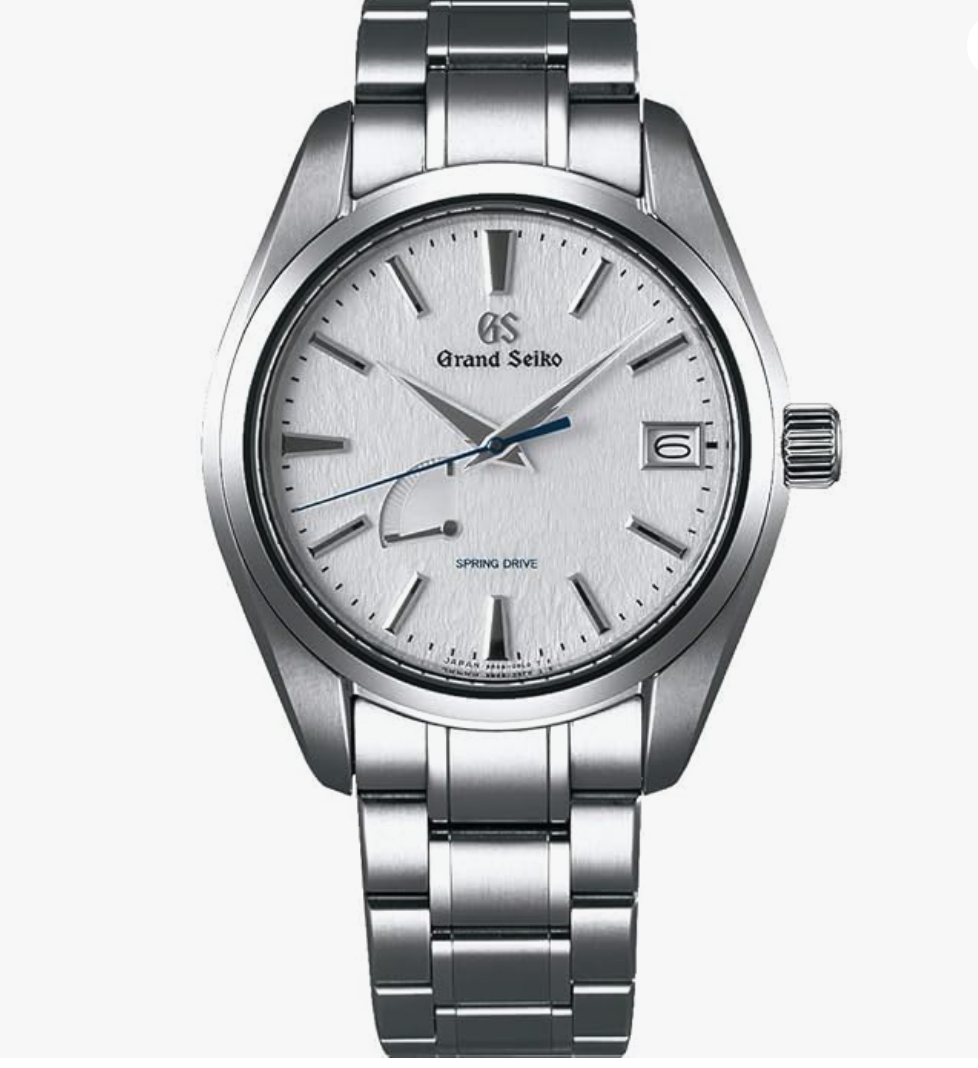
SBGA211 Snowflake
Why this is a BIFL buy
The Spring Drive movement exists nowhere else on earth. The Zaratsu-polished titanium case is harder than steel and virtually impossible to replicate at any price. This is a watch that appreciates in both value and meaning over time.
Full Review
There is a workshop in Nagano Prefecture, in the Japanese Alps, where the Hotaka mountain range stays white for months. In 2005, someone looked out at those peaks and thought: that's the dial. The Grand Seiko SBGA211 — the Snowflake — began as a view from a window, and became one of the most studied watch dials ever made.
The dial is not painted white. Grand Seiko silver-plates a brass base and applies a surface treatment — over 80 individual steps — that replicates the wind-carved texture of snow on mountain slopes. Under a loupe, it looks like compressed winter.
The seconds hand is blued steel, and it does not tick. The Spring Drive uses a mainspring but governs its release through an electromagnetic brake regulated by a quartz oscillator — the result is a sweep that is genuinely continuous. No battery. No compromise. ±1 second per day.
The case is high-intensity titanium, polished via the Zaratsu method borrowed from Japanese sword-making, producing edges so sharp and surfaces so clear they read as almost unreal. At around $6,600 retail, it competes with Swiss watches twice its price on finishing alone.
Who is this for?
The collector who has moved beyond brand recognition and cares about what is actually inside the case and on the dial. The Snowflake rewards close attention in a way that very few watches at any price can match.
Any downsides?
The Zaratsu-polished case scratches visibly — titanium is hard but not immune. Some owners find the power reserve indicator on the dial distracting. At $6,600+, it requires serious commitment.