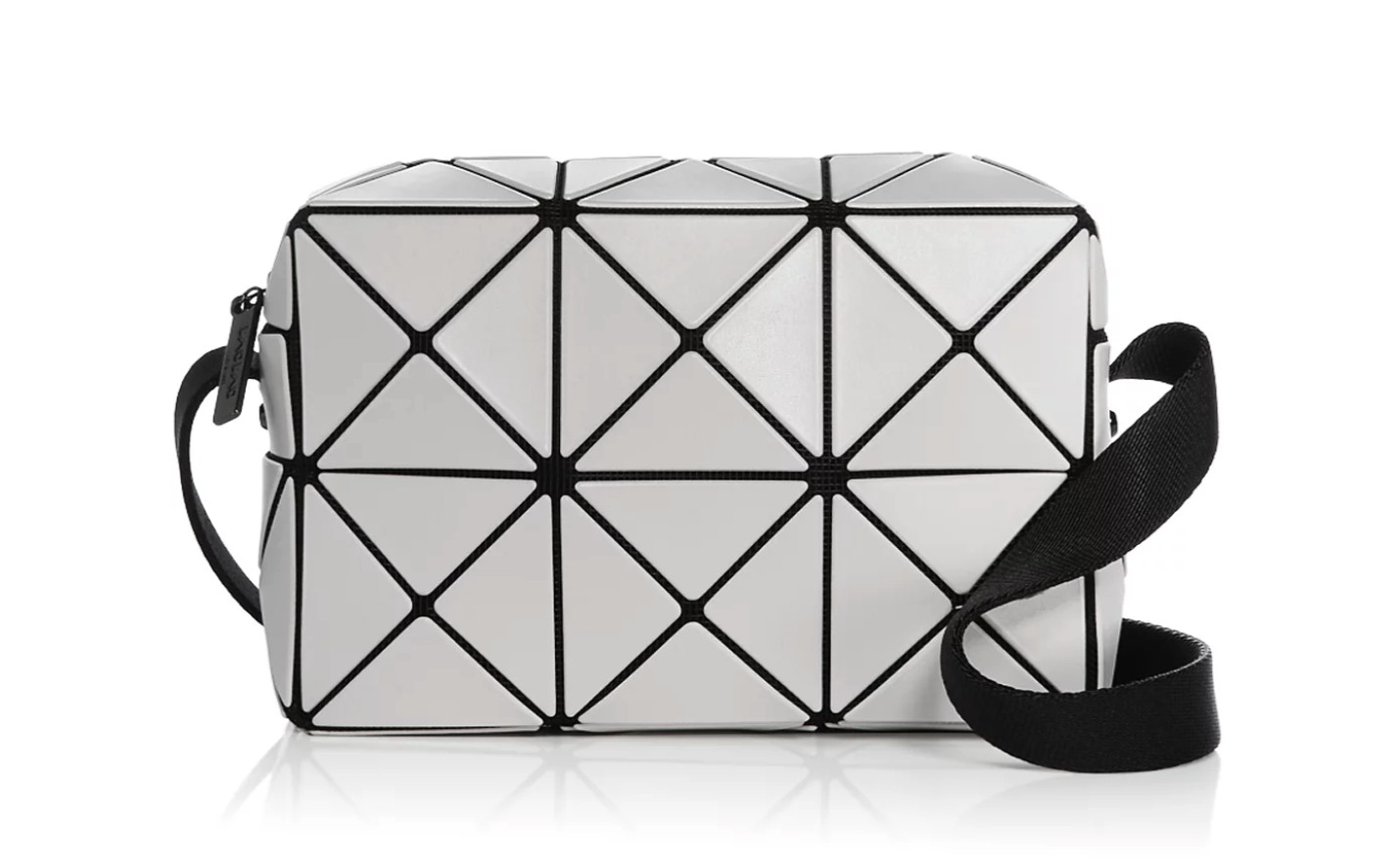
Cuboid Crossbody Bag
Why this is a BIFL buy
PVC tile construction means no leather to crack, no fabric to fray, no logo to peel. The bag folds completely flat for storage and returns to form every time. This is a design that improves with use, not despite it.
Full Review
The Bao Bao bag, first released in 2000 under the name Bilbao as a nod to Frank Gehry's Guggenheim Museum in Spain, was a direct expression of Issey Miyake's instinct: a bag composed of interlocking geometric tiles on a flexible mesh base, designed to create shapes made by chance as it fills and moves through the world.
The Cuboid Crossbody is the most daily-use entry point into the Bao Bao system. It is small, flat when empty, and three-dimensional when loaded. The tiles catch and redistribute light differently at every angle. There is no logo visible on the exterior beyond the tiles themselves — recognition is reserved for those who recognise it.
The design has been in MoMA's permanent collection and carried by architect Zaha Hadid. The tile construction means the bag folds flat when empty, stores easily in luggage, and returns to form when filled — a genuinely useful property for travel.
At $595–$695 USD, it sits at the intersection of functional object and considered design: the kind of purchase that earns its place in a wardrobe not through trend but through continued relevance.
Who is this for?
The design-conscious traveller or creative professional who wants a bag that functions as both a daily carry and a conversation piece. Gender-neutral and wardrobe-agnostic.
Any downsides?
Metallic finishes show fingerprints; matte variants are lower maintenance. The PVC tiles can feel stiff in very cold weather. At $600+, it requires genuine commitment to the aesthetic.